

 See My Latest Article on HelloNation

For pet owners in Zionsville, PA, the right boarding length depends less on a fixed number of days and more on the animal’s age, health, temperament, routine, and the quality of care available. A healthy, adaptable adult dog or cat may handle a week or two comfortably, while a senior pet, anxious animal, or medically complex pet may need a shorter stay or a more individualized arrangement.
How long is too long for pet boarding?
There is no universal maximum, but boarding becomes too long when the stay creates ongoing stress, disrupts essential care, or exceeds what the pet can tolerate physically and emotionally.
As a general planning guide:
- One to three nights: Often manageable for healthy adult pets that have previously boarded or are comfortable in unfamiliar settings.
- Four to seven nights: Common for vacations or short trips, provided the pet has a stable routine and appropriate supervision.
- One to two weeks: Possible for many adaptable pets, but the boarding arrangement should be carefully matched to the animal’s needs.
- More than two weeks: Requires more detailed planning, regular updates, and close attention to behavior, appetite, exercise, medication, and sleep.
- Several weeks or longer: May be unsuitable for a traditional boarding environment, especially for pets that are elderly, highly anxious, medically fragile, or strongly attached to their home routine.
The number of nights matters, but it is only one part of the decision. A calm, well-supervised five-day stay may be easier than a poorly matched two-night stay.
What factors determine a pet’s boarding limit?
A pet’s tolerance for boarding depends on individual characteristics rather than species alone. Two dogs from the same household may respond very differently to the same environment.
Consider the following:
- Age: Puppies and kittens need frequent meals, rest, bathroom breaks, and supervision. Older pets may need joint support, slower activity, or more opportunities to rest.
- Health: Chronic conditions, recent surgery, digestive problems, mobility limitations, and medication schedules can make longer boarding more difficult.
- Temperament: Social animals may enjoy regular interaction, while cautious pets may need quiet spaces and limited handling.
- Previous experience: A pet that has boarded successfully before may adjust more easily than one experiencing an unfamiliar setting for the first time.
- Daily routine: Animals accustomed to precise meal times, long walks, or quiet sleeping arrangements may need a boarding plan that preserves those habits.
- Household changes: A recent move, new baby, loss of another pet, or other disruption can reduce a pet’s ability to cope with a new environment.
Cats often appear independent, but many are highly sensitive to changes in smell, sound, location, and handling. Some cats may manage a longer stay well in a quiet, predictable space, while others may eat less or hide when away from home.
Is a two-week boarding stay too long?
A two-week stay is not automatically too long for a healthy, adaptable pet. It is more likely to go well when the animal has already completed a shorter trial stay and continues to eat, sleep, eliminate, and interact normally.
Before arranging two weeks of boarding, confirm that the pet can receive:
- Consistent meals and fresh water
- Appropriate exercise without forced activity
- Regular bathroom opportunities
- Medication at the correct times
- Safe rest periods
- Protection from excessive heat, cold, noise, and overstimulation
- Monitoring for changes in appetite, stool, urination, energy, and behavior
Longer stays should include a clear plan for what happens if the pet becomes ill, refuses food, develops diarrhea, or shows signs of injury. Emergency contact information, veterinary records, medication instructions, and permission for necessary medical care should be provided in advance.
What signs show that boarding is becoming stressful?
Stress may be subtle, particularly in cats and quiet dogs. A pet does not need to show dramatic distress for the arrangement to be unsuitable.
Possible warning signs include:
- Refusing food or eating much less than usual
- Repeated vomiting or diarrhea
- Excessive panting, pacing, trembling, whining, or barking
- Hiding for extended periods
- Repeated attempts to escape
- Destructive behavior that is unusual at home
- Uncharacteristic aggression or fear
- Inability to settle or sleep
- Excessive licking, scratching, or other repetitive behavior
- Marked lethargy or reduced interest in normal activities
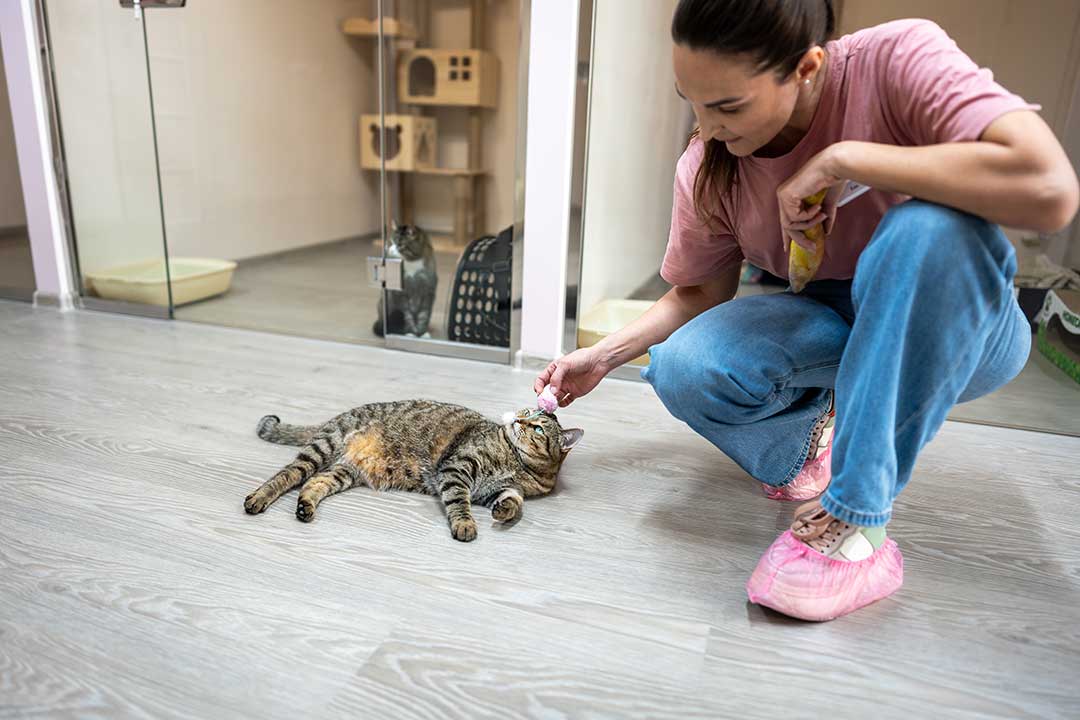
Some pets are tired after boarding because of extra activity or excitement. That can be normal for a short time. Persistent exhaustion, appetite changes, gastrointestinal symptoms, or unusual behavior deserve prompt attention.
A pet that shows worsening stress over several days may need a quieter setup, a change in routine, a shortened stay, or a different form of care.
Do puppies, kittens, senior pets, or pets with medical needs need shorter stays?
Often, yes. Younger and older animals usually require more individualized planning, although age alone does not determine whether boarding is appropriate.
Puppies and kittens may need frequent feeding, sleep, bathroom breaks, and protection from unsafe interactions. They may also be more vulnerable to illness if their vaccinations are incomplete or their immune systems are still developing. Boarding requirements should be reviewed before making a reservation.
Senior pets may need orthopedic support, slower walks, easier access to food and water, and more frequent bathroom opportunities. A long stay can be reasonable if the environment is calm and the pet’s routine is well understood, but extended separation may be harder for animals with hearing loss, vision changes, cognitive decline, or mobility problems.
Pets with diabetes, seizure disorders, heart disease, kidney disease, allergies, or other ongoing conditions may require care that cannot be handled casually. Their boarding plan should include written instructions, medication details, recent health information, and a clearly identified emergency decision-maker.
How should local seasonal conditions affect boarding plans?
Seasonal conditions in Zionsville can influence transportation, exercise, and emergency planning. During hot, humid weather, pets need protection from overheating and should not be left in poorly ventilated areas or transported during the hottest part of the day. In winter, ice, snow, and cold temperatures can make outdoor activity more difficult, especially for small, short-haired, elderly, or arthritic animals.
Severe weather can also delay travel or affect access to a boarding facility. A trip planned for several days may become longer if roads are unsafe or flights are canceled. Owners should provide enough medication and food for extra time, along with backup instructions if the return date changes.
Flooding, power outages, and other local disruptions are less common but still worth considering. A responsible boarding plan includes a way to reach the owner or an authorized emergency contact if normal operations are interrupted.
What can make a long stay easier for a pet?
Preparation can reduce stress more effectively than simply choosing the shortest possible stay. A pet that has never spent a night away may benefit from a gradual introduction rather than being placed into a lengthy boarding period immediately.
Helpful steps include:
- Completing a short trial stay before a longer trip
- Providing written feeding, medication, and behavior instructions
- Sending familiar food when possible
- Explaining normal bathroom habits and sleep patterns
- Bringing a familiar blanket or washable comfort item if allowed
- Sharing information about triggers, fears, handling preferences, and favorite activities
- Leaving current identification and emergency contact details
- Avoiding major routine changes immediately before departure
Owners should also ask how often pets are observed, how medication is documented, what enrichment is provided, and how illness or injury is handled. These questions are relevant whether the stay lasts two nights or three weeks.
When is another care arrangement more appropriate?
Traditional boarding may not be the best choice for pets that become severely distressed, cannot safely share space, need frequent medical monitoring, or rely heavily on a familiar home environment. In those situations, care in the pet’s home or a quiet individual setting may reduce disruption.
The central question is not simply, “How many days can a pet board?” It is, “Can this animal remain safe, healthy, rested, and emotionally stable in this setting for the entire period?” If the answer is uncertain, a shorter trial, a more specialized arrangement, or a different care environment may be the safer choice.